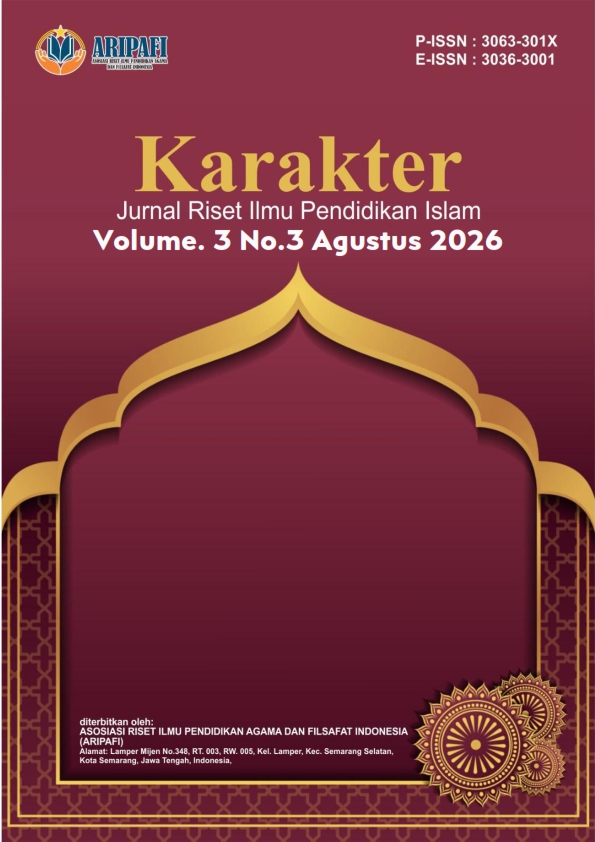
Akal di Tengah Hoaks: Relevansi Mu’tazilah Era Digital
DOI:
https://doi.org/10.61132/karakter.v3i3.2475Keywords:
Critical Thinking, Digital Literacy, Hoaxes, Mu’tazilah, RationalityAbstract
This study aims to analyze the concept of rationality in Mu’tazilah thought, explain its relevance to information-related issues in the digital era, and outline its application in fostering a critical mindset within society. The research employs a qualitative approach, specifically library research utilizing a descriptive-analytical method. Data were gathered from academic books, journal articles, and research findings discussing Mu’tazilah thought, the role of reason, al-uṣūl al-khamsah (the Five Principles), hoaxes, disinformation, digital literacy, tabayyun (verification/clarification), and critical thinking. Data analysis was conducted using qualitative content analysis, involving repeated reading, coding of key ideas, categorization, cross-source comparison, and the interpretation of conceptual relationships. The findings indicate that the Mu’tazilah school positions reason as a crucial instrument for comprehending truth, distinguishing between good and evil, and establishing accountability for human choices. These principles of rationality, freedom, and moral responsibility are relevant in addressing hoaxes, misinformation, disinformation, group fanaticism, social polarization, and the lack of a verification culture in the digital sphere. The values of Mu’tazilah rationality can be actualized through strengthening digital literacy, cultivating the habit of tabayyun, verifying sources, evaluating evidence, engaging in scholarly discussion, and fostering critical thinking education. The study concludes that Mu’tazilah rationality possesses not only historical-theological value but can also be contextualized as an epistemic and ethical foundation for a digital society that is objective, selective, open-minded, and responsible. The implication is that educational institutions can serve as a foundation for developing Islamic Religious Education (PAI) learning based on information verification, argumentative dialogue, and digital communication ethics.
References
Ahmad Muhamad Mustain Nasoha, Ashfiya Nur Atqiya, Hilmi Khoiri Thohir, Natasha Aurelia Ramadhani, & Rosya Ahya Sabilaa. (2025). Etika Komunikasi dalam Islam: Analisis terhadap Konsep Tabayyun dalam Media Sosial. ALADALAH: Jurnal Politik, Sosial, Hukum dan Humaniora, 3(2), 224–232. https://doi.org/10.59246/aladalah.v3i2.1315
Aïmeur, E., Amri, S., & Brassard, G. (2023). Fake news, disinformation and misinformation in social media: A review. Social Network Analysis and Mining, 13(1), 30. https://doi.org/10.1007/s13278-023-01028-5
Anshar, M., & Arsal, A. F. (2023). The Ethics of Digital Communication and Message Sharing on Social Media. Jurnal Komunikasi Islam, 13(2), 249–268. https://doi.org/10.15642/jki.2023.13.2.249-268
Axelsson, C.-A. W., Nygren, T., Roozenbeek, J., & Van Der Linden, S. (2025). Bad News in the civics classroom: How serious gameplay fosters teenagers’ ability to discern misinformation techniques. Journal of Research on Technology in Education, 57(5), 992–1018. https://doi.org/10.1080/15391523.2024.2338451
Azmi, N. A., Fathani, A. T., Sadayi, D. P., Fitriani, I., & Adiyaksa, M. R. (2021). Social Media Network Analysis (SNA): Identifikasi Komunikasi dan Penyebaran Informasi Melalui Media Sosial Twitter. JURNAL MEDIA INFORMATIKA BUDIDARMA, 5(4), 1422. https://doi.org/10.30865/mib.v5i4.3257
Brown, P., & Gummerum, M. (2025). Trust issues: Adolescents’ epistemic vigilance towards online sources. British Journal of Developmental Psychology, 43(3), 578–594. https://doi.org/10.1111/bjdp.12559
Ellyy Warnisyah Harahap, Ulfah Fadillah, Nislah Nasution, Bagus Prasetyo, Fernando Yahya Sitohang, Ayu Purnama Sari, & Mhd Shiddiq Daulay. (2024). Epistemologi Pemikiran Mu’tazilah dan Pengaruhnya terhadap Perkembangan Pemikiran Islam di Indonesia. Mimbar Kampus: Jurnal Pendidikan dan Agama Islam, 23(2). https://doi.org/10.47467/mk.v23i2.3725
Fitria, T. N. (2023). A Library Research in English Education Research: A Guidance for Researchers in Writing Non-Research Articles. 6(1).
Graf, A., & Muslimin, J. (2022). SOCIAL MEDIA, MUSLIM COMMUNITY, AND THE PANDEMIC: Context-Oriented Approaches to Misinformation and Disinformation in Indonesia and Malaysia. JOURNAL OF INDONESIAN ISLAM, 16(2), 279. https://doi.org/10.15642/JIIS.2022.16.2.279-302
Hagelstein, J. (t.t.). Ethical Challenges of Digital Communication: A Comparative Study of Public Relations Practitioners in 52 Countries.
Harrison, T., & Polizzi, G. (2022). (In)civility and adolescents’ moral decision making online: Drawing on moral theory to advance digital citizenship education. Education and Information Technologies, 27(3), 3277–3297. https://doi.org/10.1007/s10639-021-10710-0
Janah, F., & Yusuf, A. (2021). Etika Komunikasi di Media Sosial Melalui Prisip SMART (Salam, Ma’ruf, dan Tabayyun) Perspektif Al-Quran. JAWI, 3(2). https://doi.org/10.24042/jw.v3i2.8068
Juditha, C., & Darmawan, J. J. (2024). KOMUNIKASI POLITIK TERKAIT HOAKS PADA PEMILU PRESIDEN INDONESIA 2024. 28(2).
Ku, K. Y. L., Fung, T. M. Y., Au, A. C. Y., Choy, A. Y. O., Kajimoto, M., & Song, Y. (2025). Helping young students cope with the threat of fake news: Efficacy of news literacy training for junior-secondary school students in Hong Kong. Educational Studies, 51(4), 588–606. https://doi.org/10.1080/03055698.2023.2296345
Luo, Y. F., Yang, S. C., & Kang, S. (2022). New media literacy and news trustworthiness: An application of importance–performance analysis. Computers & Education, 185, 104529. https://doi.org/10.1016/j.compedu.2022.104529
Meirbekov, A., Maslova, I., & Gallyamova, Z. (2022). Digital education tools for critical thinking development. Thinking Skills and Creativity, 44, 101023. https://doi.org/10.1016/j.tsc.2022.101023
Mighfaza, M. H., & Muhlas, M. (2021a). Al-Ushul Al-Khamsah Mutazilah dalam Pandangan Kh. Mustain Syafiie (Studi Analisis di Pondok Pesantren Tebuireng Jombang). Jurnal Penelitian Ilmu Ushuluddin, 1(3), 224–239. https://doi.org/10.15575/jpiu.11742
Muhammad Zakir Hasibuan & Sapri Sapri. (2025). Aliran Ilmu Kalam dan Pokok Pikirannya Masing-masing. Jurnal Miftahul Ilmi: Jurnal Pendidikan Agama Islam, 2(1), 138–158. https://doi.org/10.59841/miftahulilmi.v2i1.46
Muhyidin, M., & Nasihin, N. (2020). Rasionalitas Teologi Mu’tazilah. Ummul Qura: Jurnal Institut Pesantren Sunan Drajat (INSUD) Lamongan, 15(2), 77–85. https://doi.org/10.55352/uq.v15i2.157
Mustakim, Z., Ali, F., & Kamal, R. (2021). Empowering Students as Agents of Religious Moderation in Islamic Higher Education Institutions. Jurnal Pendidikan Islam, 7(1), 65–76. https://doi.org/10.15575/jpi.v7i1.12333
Neuberger, C., Bartsch, A., Fröhlich, R., Hanitzsch, T., Reinemann, C., & Schindler, J. (2023). The digital transformation of knowledge order: A model for the analysis of the epistemic crisis. Annals of the International Communication Association, 47(2), 180–201. https://doi.org/10.1080/23808985.2023.2169950
Nicmanis, M. (2024). Reflexive Content Analysis: An Approach to Qualitative Data Analysis, Reduction, and Description. International Journal of Qualitative Methods, 23, 16094069241236603. https://doi.org/10.1177/16094069241236603
Nugroho, D. W., Riyantini, R., & Handayani, L. (2021). KOMUNIKASI ADVOKASI KLARIFIKASI FAKTA PEMBERITAAN HOAKS PADA INSTAGRAM @JALAHOAKS. Jurnal Pustaka Komunikasi, 4(2), 198–211. https://doi.org/10.32509/pustakom.v4i2.1565
Nurfazri, M., Irwansyah, F. S., Lukman, F., Ruhullah, M. E., & Marinda, S. M. (2024). Digital Literacy in Education: An Analysis of Critical Thinking Culture for Preventing the Hoaxes. Jurnal Perspektif, 8(1), 1–22. https://doi.org/10.15575/jp.v8i1.268
Örtegren, A. (2024). Philosophical underpinnings of digital citizenship through a postdigital lens: Implications for teacher educators’ professional digital competence. Education and Information Technologies, 29(4), 4253–4285. https://doi.org/10.1007/s10639-023-11965-5
Perwita, D. (2021). Literasi Media Digital Mahasiswa Universitas Jenderal Soedirman. EQUILIBRIUM : Jurnal Ilmiah Ekonomi dan Pembelajarannya, 9(1), 8. https://doi.org/10.25273/equilibrium.v9i1.8515
Priwati, A. R., & Helmi, A. F. (2021a). The manifestations of digital literacy in social media among Indonesian youth. HUMANITAS: Indonesian Psychological Journal, 18(1), 14. https://doi.org/10.26555/humanitas.v18i1.17337
Putri, D. F., Munawwaroh, I., & Qushwa, F. G. (t.t.). KONTEKSTUALISASI AKAL DAN WAHYU: PEMIKIRAN TAFSIR MU’TAZILAH DALAM PERADABAN ISLAM.
Riduan, A., Hartati, Z., & Nasir, M. (2025). Mu’tazilah di Era Modern: Kajian Konsep Keadilan, Kebebasan, dan Rasionalitas dalam Pemikiran Islam. Jurnal Studi Islam dan Kemuhammadiyahan (JASIKA), 5(1), 37–53. https://doi.org/10.18196/jasika.v5i1.155
Rusdy, M. (2021). Pengaruh Literasi Digital Terhadap Pencegahan Informasi Hoaks pada Remaja di SMA Negeri 7 Kota Lhokseumawe. Jurnal Pekommas, 6(2), 77–84. https://doi.org/10.56873/jpkm.v6i2.4271
Saputra, R., Putra, R., & Putri, E. W. (2021). Moderasi Islam Ahmad Syafii Maarif (Kontribusinya terhadap Pluralitas Agama di Indonesia). FIKRAH, 9(1), 63. https://doi.org/10.21043/fikrah.v9i1.10305
Siaran Pers Mafindo: Hoaks Politik Meningkat Tajam Jelang Pemilu 2024, Ganggu Demokrasi Indonesia – Mafindo. (2024, Februari 2). Diambil 23 Juli 2026, dari https://mafindo.or.id/2024/02/02/siaran-pers-mafindo-hoaks-politik-meningkat-tajam-jelang-pemilu-2024-ganggu-demokrasi-indonesia/
Vears, D. F., & Gillam, L. (2022). Inductive content analysis: A guide for beginning qualitative researchers. Focus on Health Professional Education: A Multi-Professional Journal, 23(1), 111–127. https://doi.org/10.11157/fohpe.v23i1.544
Zou’bi, R. A.-. (2021). The impact of media and information literacy on acquiring the critical thinking skill by the educational faculty’s students. Thinking Skills and Creativity, 39, 100782. https://doi.org/10.1016/j.tsc.2020.100782
Downloads
Published
How to Cite
Issue
Section
License
Copyright (c) 2026 Muhammad Mafaz Kholthy

This work is licensed under a Creative Commons Attribution-ShareAlike 4.0 International License.