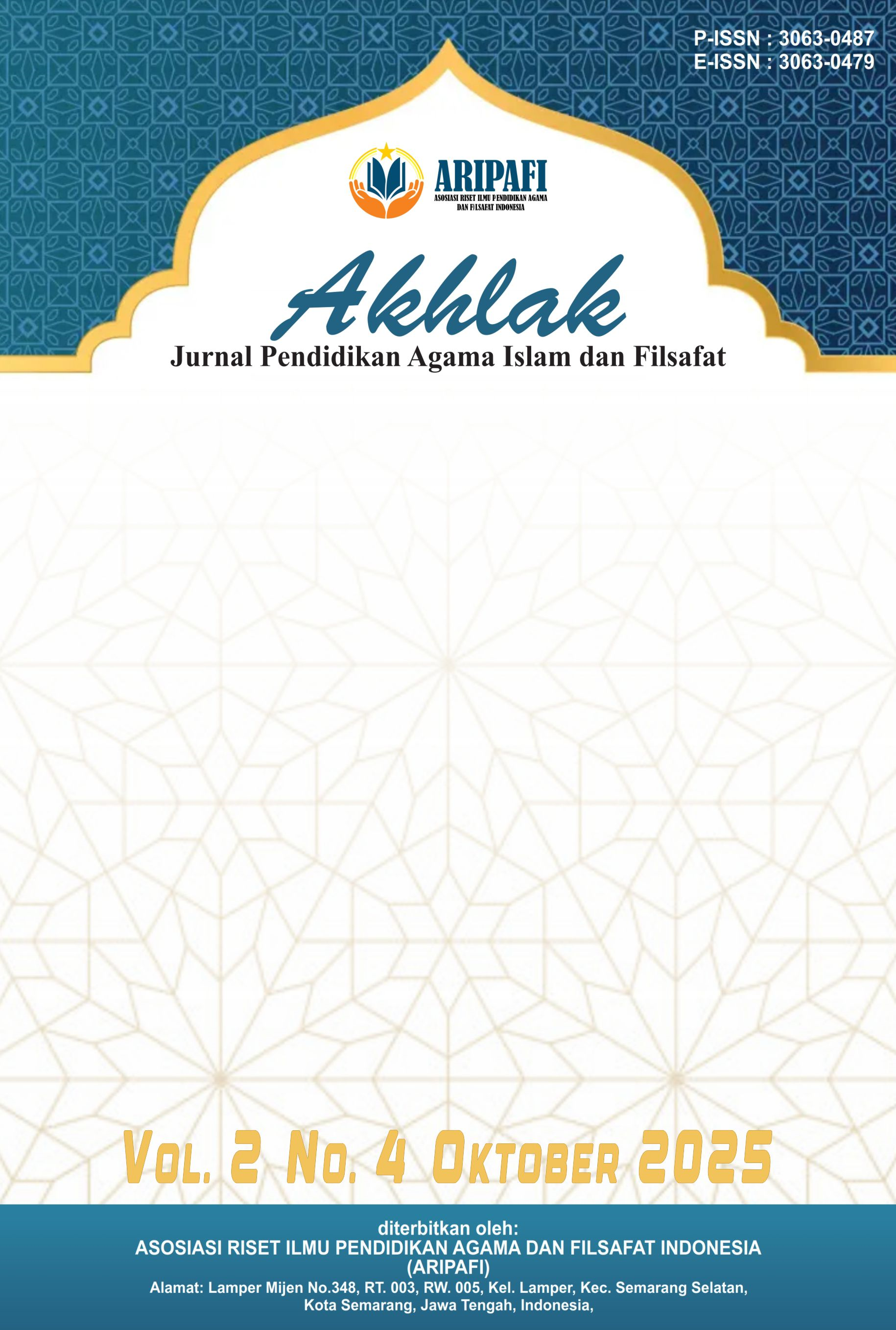
Implementasi Nilai Shidq, Amanah, Istiqamah, dan Rahmah dalam Pembinaan Akhlak Siswa SMK Al-Azami
DOI:
https://doi.org/10.61132/akhlak.v2i4.1406Keywords:
Amanah, Prophet Muhammad’s Morals, Rahmah, Shidq, IstiqamahAbstract
This study aims to describe the characteristics of SMK Al-Azami students in emulating the morals of the Prophet Muhammad (peace be upon him) as part of character development based on Islamic values within vocational education. The background of this research lies in the urgency of character education that not only emphasizes academic competence and technical skills but also focuses on moral formation and professional ethics. This research employed a qualitative approach using a library research method by analyzing relevant classical and modern Islamic literature, supported by documentation of school activities. The results reveal that the moral values of the Prophet Muhammad have been well internalized in students’ daily behavior, which includes four core dimensions: Shidq (honesty), Amanah (trustworthiness), Istiqamah (discipline), and Rahmah (compassion). The value of Shidq is reflected in students’ honesty during vocational practice and in reporting work results; Amanah is demonstrated through responsibility for tools and group tasks; Istiqamah appears in punctuality, consistency, and work discipline; and Rahmah is shown through respectful, empathetic, and cooperative social interactions. The findings indicate that Islamic character education effectively shapes students with integrity, discipline, and social awareness, serving as a model for moral development in vocational schools. Furthermore, this research highlights the importance of strengthening teacher exemplarity, religious habituation, and curriculum integration of Islamic moral values in vocational learning to ensure sustainable character development.
References
Abdullah, K., Jannah, M., Aiman, U., Hasda, S., Fadilla, Z., Taqwin, Masita, Ardiawan, K. N., & Sari, M. E. (2022). Metodologi penelitian kuantitatif. Yayasan Penerbit Muhammad Zaini. http://penerbitzaini.com
Agustia, M., & Syamal, D. (2025). Meningkatkan perilaku amanah siswa melalui pembelajaran pendidikan agama Islam di SMP Negeri 4 Pariaman. Jurnal Studi Tindakan Edukatif (JSTE), 1(3), 834–839.
Azizah, M. (2023). Internalisasi nilai-nilai pendidikan Islam dalam menghadapi globalisasi: Tahap transformasi, transaksi, dan transinternalisasi. Al Ashr: Jurnal Pendidikan Islam, 5(2), 45–62. https://doi.org/10.54213/tsaqafatuna.v5i1.209
Damayanty Syamsul, T., Feliks Arfid Guampe, Mk., Nurus Amzana, Ms., Faruq Alhasbi, Mp., Yusriani, Mik., Aries Yulianto, Mk., Sri Handayani, Ms., Juwita Desri Ayu, Skmmk., Giri Widakdo, Mk., Ir Fitria Virgantari, M., Ir Hasmar Halim, Ms., & IPM Ns Naryati, S. M. (2023). Metode penelitian kuantitatif: Teori dan penerapannya.
Lathifah, H. G. T., Rahmadini, K. P. A., Hermawan, M. D., Rasyid, F., & Fadhil, A. (2025). Peran pendidikan agama Islam dalam membentuk karakter jujur pada anak usia dini. Hikmah: Jurnal Studi Pendidikan Agama Islam, 2(1), 198–208. https://doi.org/10.61132/hikmah.v2i1.591
Lubis, A. R., & rekan. (2024). Internalisasi nilai-nilai akhlak pada mata pelajaran PAI di SMP: Studi kasus di SMP Panca Budi Medan. IKHLAS: Jurnal Pendidikan Islam, 1(4), 85–94. https://doi.org/10.61132/ikhlas.v1i4.129
Mahfud, M. (2025). The role of character education in building morals and ethics among students in Islamic schools. Maalim: Jurnal Pendidikan Islam, 3(1), 10–25.
Marlina, E., Azzahra, S., & Dewi, R. S. (2024). Strategi efektif menanamkan nilai kejujuran pada generasi muda melalui pendidikan karakter. Ainara Journal (Jurnal Penelitian Dan PKM Bidang Ilmu Pendidikan), 5(3), 326–330. https://doi.org/10.54371/ainj.v5i3.555
Nursobah, A. (2025). Integrative model of religious habituation in vocational Islamic education: Balancing professional skills and akhlakul karimah. Fitrah: Jurnal Pendidikan Islam, 6(1), 23–37.
Ramadani, S., & Sofa, A. R. (2025). Kejujuran dalam perspektif pendidikan Islam: Nilai fundamental, strategi implementasi, dan dampaknya terhadap pembentukan karakter santri di pesantren. Jurnal Manajemen Dan Pendidikan Agama Islam, 3(1), 193–210. https://doi.org/10.61132/jmpai.v3i1.848
Sahara, S., & Rahman, M. H. (2025). Strategi guru dalam membentuk karakter amanah pada anak usia dini di KB Madani Mandailing Natal. Prosiding Fakultas Agama Islam Universitas Dharmawangsa, 5, 175–182. https://doi.org/10.46576/pfai.v5i0.542
Sahroh, A., & Rizkiyah, N. N. I. (2021). Nilai kejujuran dalam pendidikan karakter: Studi hadis Bukhari No. 5629. Nusantara: Jurnal Pendidikan Indonesia, 1(2), 335–366. https://doi.org/10.14421/njpi.2021.v1i2-6
Shalahuddin, M., Tansah, L., Hasanah, A., & Arifin, B. S. (2024). Penanaman nilai akhlak berbasis pendidikan Islam sebagai landasan teori pendidikan karakter di sekolah. Pendas: Jurnal Ilmiah Pendidikan Dasar, 9(3), 245–257.
Wada, F. H., Pertiwi, A., Hasiolan, M. I. S., Lestari, S., Sudipa, I. G. I., Patalatu, J. S., Boari, Y., Ferdinan, -, Puspitaningrum, J., Ifadah, E., & Rahman, A. (2024). Buku ajar metodologi penelitian. In Cv Science Techno Direct. PT. Sonpedia Publishing Indonesia. https://www.researchgate.net/publication/377223521
Wisiyanti, R. A. (2024). Penguatan pendidikan karakter melalui pendidikan agama Islam di era globalisasi. EDUKASIA: Jurnal Pendidikan Dan Pembelajaran, 5(1), 1965–1974.
Downloads
Published
How to Cite
Issue
Section
License
Copyright (c) 2025 Akhlak : Jurnal Pendidikan Agama Islam dan Filsafat

This work is licensed under a Creative Commons Attribution-ShareAlike 4.0 International License.