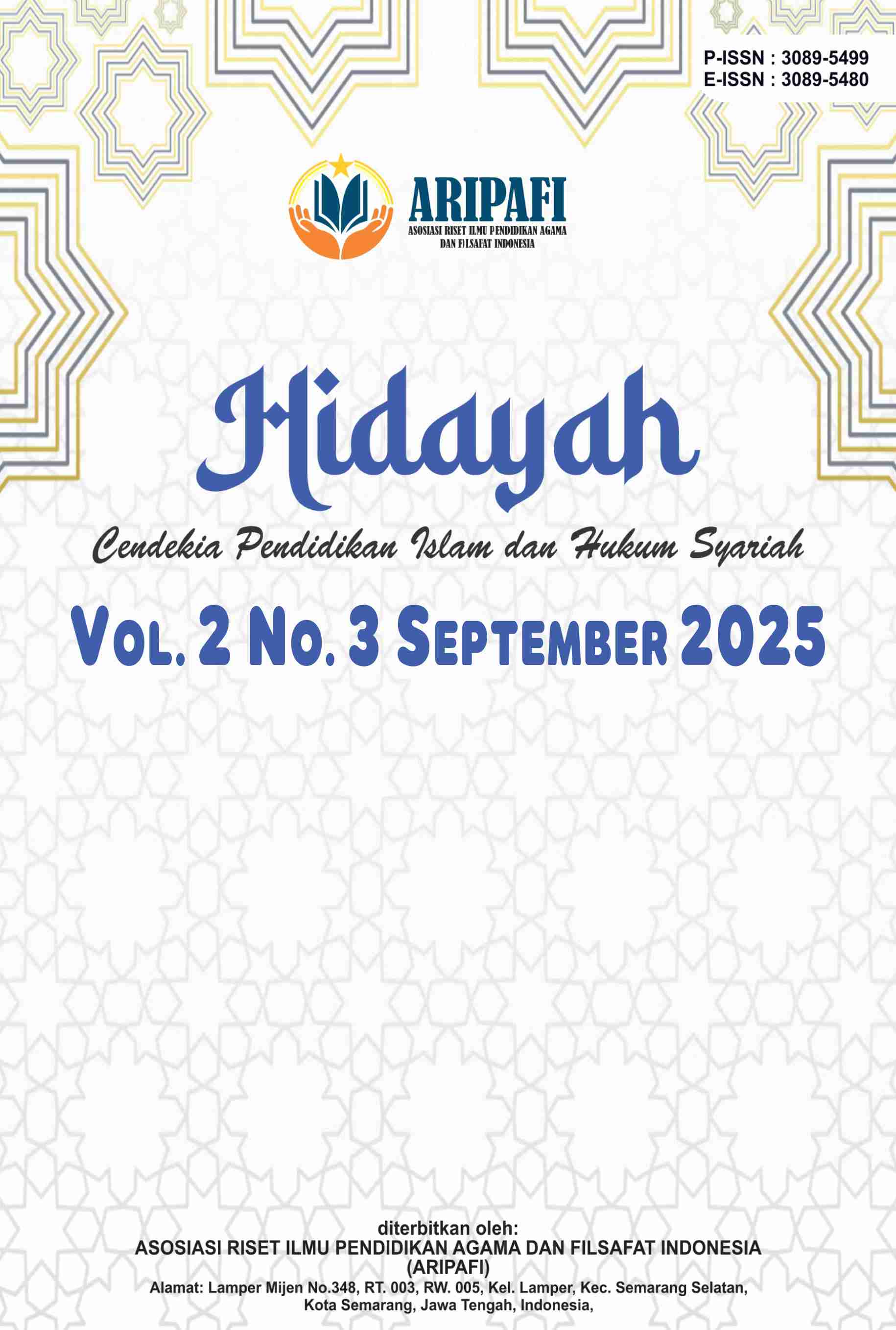
Interaksi Ruhani Antara Orang Yang Sudah Meninggal Dengan Orang-Orang Yang Masih Hidup
Studi Tafsir Tematik Ayat-ayat Ruh dalam Tafsir Al-Mishbâh
DOI:
https://doi.org/10.61132/hidayah.v2i3.1251Keywords:
Ruh, Barzakh, Tafsir al-MishbahAbstract
This study aims to analyze M. Quraish Shihab's views on spiritual interaction between the deceased and the living in Tafsir al-Mishbah. This issue is highly urgent because the debate surrounding the soul and the afterlife has existed since the time of the Prophet Muhammad (peace be upon him) and continues to be a polemic to this day. To answer this question, a qualitative research method with a library research approach was used. Primary data came from Tafsir al-Mishbah, where the Quranic verses about the soul were analyzed thematically. Secondary data were obtained from various classical and contemporary tafsir books, hadith books, and books on interpretation methodology to provide a comprehensive understanding. The results show that, according to M. Quraish Shihab, humans are bidimensional beings. Death is not the end of existence, but rather a transition from the mundane realm to the Barzakh realm, where the soul remains alive. Although human knowledge is very limited regarding the unseen realm, interaction between the souls of the living and the deceased is possible, especially through dreams. In conclusion, M. Quraish Shihab argues that souls in the Barzakh realm remain alive and conscious, and can interact with other souls, although in a different way from communication in the physical world.
References
. A., & Iqbal, M. (2022). KAJIAN KRITIS TERHADAP PEMIKIRAN TENTANG JIWA (AL-NAFS) DALAM FILSAFAT ISLAM. Inspiratif Pendidikan, 11(1). https://doi.org/10.24252/ip.v11i1.30125
Al- Qurthubî, A. A. A. ibn M. ibn A. ibn A. B. ibn F. al-A. (n.d.). al-Tadzkirah bi Ahwâl al-Mautâ wa Umûr al-Akhirah. Dâr al-Minhâj.
Al-Asqalani, I. H. (2005). Fath al-Bârî. Dar al-Hadis.
Al-Farabi, A. N. (n.d.). Arâ’ Ahl al-Madînah al-Fadlîlah. Maktabah Mathba’at Muhammad Ali.
Al-Ghazali, A. H. (1967). al-Munqidz min al-Dhalâl. Dar al-Andalus.
Al-Jauziyah, I. Q. (1992). al-Rûh fî al-Kalâm ‘alâ Arwâh al-Amwât wa al-Ahyâ’ bi al-Dalâil min al-Kitâb wa al-Sunnah wa al-Athâr wa al-Aqwâl al-‘Ulamâ.’ Dar al- Fikr.
Al-Kattani, A. H. (1999). Kaifa Nata‘amal ma‘a al-Qur’ân al ‘Azhîm. Gema Insani Press.
Al-Qasthalani. (n.d.). al-Mawâhib al-Ladunniyah bi al-Minah al-Muhammadiyah. Dar al-Kutub al-Ilmiyyah.
Al-Qhurtubi, A. A. A. M. ibn A. ibn A. B. (2006). al-Jâmi’ li Ahkâm Al-Qur’ân. al-Muassisah al-Risalah.
Al-Suyuti, J. (1993). Tanwîr al-Halak fî Ru`yat al-Nabi wa al-Malak. Dar al-Amin.
Al-Sya’rawi, M. M. (n.d.). al-Hayah wa al-Maut. Dar Akhbar al- Yaum.
Al-Syaukani, M. ibn A. ibn M. (2006). Fath al-Qadîr. Dâr al-Ma‟rifah.
Arabi, A. B. ibnu. (1986). Qanûn al-Ta`wîl. Dar al-Qiblah li ats-Tsaqafah al- Islamiyyah.
At-Tirmidzi, M. ibn A. I. H. ibn B. (2008). Nawâdir al-Ushûl fî Ma’rifah Ahâditsi al-Rasûl. Dâr al-Kutub al-Mishriyyah.
Bashori, A. I. (2020). Kehidupan Setelah Kematian. KACA (Karunia Cahaya Allah): Jurnal Dialogis Ilmu Ushuluddin, 10(1). https://doi.org/10.36781/kaca.v10i1.3070
Hadiwijono, H. (2000). Sejarah Filsafat Barat I. Penerbit Kanisius.
Hernawan, W. (2017). POSISI RUH DALAM REALITAS MENURUT IBNU QAYIM ALJAUZIYAH. Syifa Al-Qulub, 1(2), 74–87. https://doi.org/10.15575/saq.v1i2.1433
Jawhari, T. (1974). al-Jawâhir fî Tafsîr al-Qur‘ân al-Karîm. Dar al- Kutub.
M. Quraish Shihab. (2002). Tafsir Al-Misbah Pesan, Kesan, dan Keserasian Al-Qur’an. In Sustainability (Switzerland) (Vol. 15, Issue 1).
Malyuna, S. I. (2023). ANALISIS PARADIGMA MIMPI DALAM SUDUT PANDANG ISLAM. Tafáqquh: Jurnal Penelitian Dan Kajian Keislaman, 11(2). https://doi.org/10.52431/tafaqquh.v11i2.2048
Mardlatillah, S. D., & Nurjannah. (2023). Konsep Tidur dalam Perspektif Psikologi dan Islam. Happiness: Journal of Psychology and Islamic Science, 7(1). https://doi.org/10.30762/happiness.v7i1.904
Marsyanada, N., Maryam, N., Alfahri, M. R., & Maulana, M. I. (2023). Rekonstruksi kehidupan setelah kematian. Gunung Djati Conference Series, 22.
Miskawayh, A. ibn M. ibn Y. I. (1985). Tahdzîb al-Akhlâq. Dâr al-Kutub al-Ilmiyyah.
Rasyid, H., Octaviani, N. D., & Ulfah, M. (2024). Konsep Fisik, Jiwa, dan Ruh sebagai Landasan Pendidikan Islam. Al Qalam: Jurnal Ilmiah Keagamaan Dan Kemasyarakatan, 18(3), 1848. https://doi.org/10.35931/aq.v18i3.3489
Shihab, M. Q. (2000). Tafsir al-Mishbâh: Pesan, Kesan, dan Keserasian Al- Qur’an. Lentera Hati.
Sopiansyah, D., Ahmad EQ, N., & Suhartini, A. (2021). Kehidupan Dunia dan Akhirat Dalam Perspektif Pendidikan Islam. As-Syar’i: Jurnal Bimbingan & Konseling Keluarga, 3(2). https://doi.org/10.47467/assyari.v3i2.463
Sudarmono, M. A. (2017). Pemikiran Islam Tentang Nafs. TAJDID: Jurnal Pemikiran Keislaman Dan Kemanusiaan, 1(1), 149–165. https://doi.org/10.52266/tadjid.v1i1.8
Wulandari, S., & Pranata, R. (2024). Deskripsi Kualitas Tidur dan Pengaruhnya terhadap Konsentrasi Belajar Mahasiswa. Jurnal Pendidikan Kesehatan Rekreasi, 10(1), 101–108. https://doi.org/10.59672/jpkr.v10i1.3414
Zali Rahman. (2023). URGENSI ASBAB AN-NUZUL DALAM PENAFSIRAN AL-QUR’AN (KAJIAN AYAT TENTANG RUH QS. AL-ISRA’ AYAT 85). At-Tahfidz: Jurnal Ilmu Al-Qur’an Dan Tafsir, 1(02), 116–124. https://doi.org/10.53649/at-tahfidz.v1i02.437